Loading the homepage
Blog/Strategy
TikTok Shop affiliate slideshow playbook.
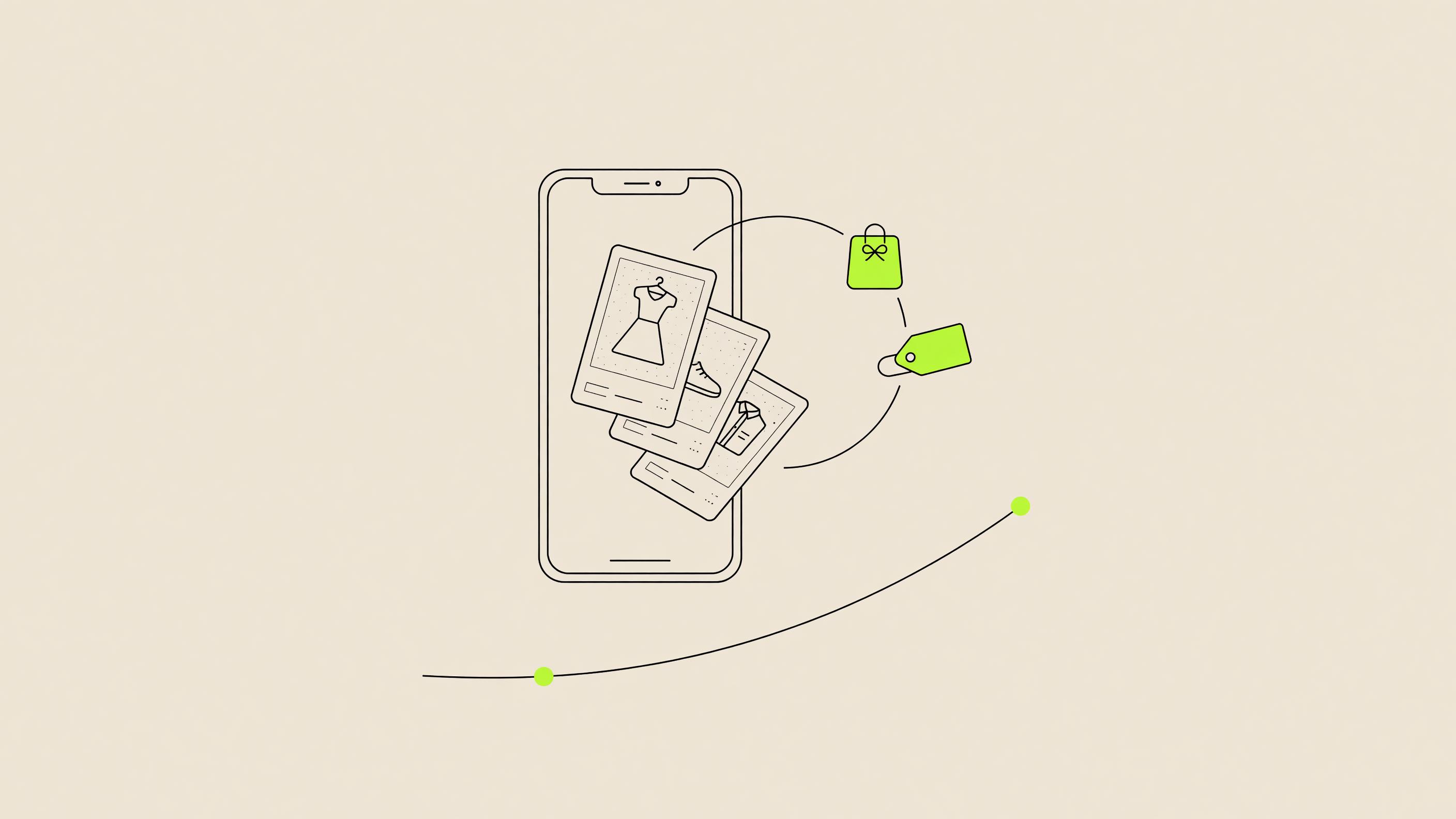
Photo posts are the cheapest unit of commerce content on TikTok, and the affiliate program pays on net sales rather than views. This is the full operating model: eligibility, product selection, slide structure, disclosure, benchmarks, and the failure modes that show up once you scale past a handful of posts a day.
MT
Matt Torres
Founder, Deeporax
Reviewed by Rhea Park, TikTok growth lead, Deeporax
Published Jul 25, 202618 min read · fact-checked
Key takeaways
- TikTok Shop is forecast to reach $23.41 billion in US sales in 2026, up 48% year over year, which makes affiliate commission the largest reliable revenue line available to a faceless slideshow account.
- An independent analysis of roughly 700,000 posts published between January and May 2025 found TikTok carousels earned 81% higher engagement rates and about 82% more likes than video, while shares ran about a third lower, so the format wins on considered interaction rather than on virality.
- US creators can apply to the affiliate program at 1,000 followers, but anyone under 5,000 enters a pilot period of at least 30 days that caps shoppable posts at three per day, which means your account warm-up schedule and your monetization schedule are the same schedule.
Why are slideshows suddenly the highest-leverage TikTok Shop format?
Two things happened at once. The commerce side of TikTok got large enough that commission became a real income line rather than a curiosity, and the photo post quietly turned into the platform's best engagement-per-dollar unit.
On the commerce side, eMarketer put TikTok Shop at $15.82 billion in US sales for 2025, growing 108% year over year and taking 18.2% of all US social commerce. Its forecast for 2026 is $23.41 billion, a 48% increase, at a moment when total US social commerce passes $100 billion for the first time. Those are not creator-economy numbers. That is a US ecommerce business larger than several national big-box retailers, and roughly a quarter of it now flows through a single platform's shoppable content.
On the format side, the case for photo posts is empirical. Fanpage Karma analysed close to 700,000 posts published between 1 January and 31 May 2025 and found that carousels on TikTok drew 81% higher engagement rates, which works out to about 1.81 times the interactions of comparable video, along with roughly 82% more likes. The same study found carousel shares ran about a third lower than video.
That share deficit matters more than it first appears, and it is the reason slideshows suit commerce specifically. Shares are the virality signal. Likes, saves and comments are the consideration signals. A format that trades reach-per-post for interaction-per-viewer is a poor fit for a brand-awareness play and an excellent fit for an affiliate link, because the person who swiped through five slides about a product has already spent more deliberate attention on it than the person who watched three seconds of a video and scrolled.
| Dimension | Photo post (slideshow) | Short video | What it means for affiliate work |
|---|---|---|---|
| Engagement rate | 81% higher | Baseline | More considered attention per impression, which is what precedes a product tap |
| Likes | About 82% more | Baseline | Stronger positive signal to the recommendation system on a per-view basis |
| Shares | About a third lower | Baseline | Less viral spread, so volume has to come from posting cadence rather than from breakout hits |
| Production cost per unit | Images, a caption and a sound | Filming, editing, pacing, audio mix | A faceless operator can produce and queue many more slideshows per hour of work |
| Iteration speed | Swap a slide, repost | Re-shoot or re-edit | Hooks and offers can be tested against each other in days rather than weeks |
Format metrics from Fanpage Karma's carousel versus video analysis of roughly 700,000 posts, January to May 2025. Cost and iteration rows are operational observations, not measured values.
There is a third factor that gets less attention: search. TikTok has become a genuine discovery surface for products, and survey work reported by Search Engine Land found 51% of Gen Z women choosing TikTok over Google as a search engine. A slideshow is a text-bearing artifact by nature. Every slide carries readable words, which gives the ranking system far more to index than a video whose meaning lives in its audio track.
What does the affiliate program actually pay, and who qualifies?
The mechanics are simple enough to describe in a paragraph, and the details are where most new operators lose money.
You join the affiliate program as a creator, browse a marketplace of products whose sellers have opened commission plans, attach a product to a post, and earn a percentage of net sales that the post drives. The seller sets the rate. TikTok holds the commission through a settlement period before releasing it, and pays on net sales, which means returns and chargebacks are deducted before you are paid. That last clause is the single most misread part of the program: your dashboard number in week one is a forecast, not a payment.
Eligibility in the US starts lower than most people assume. TikTok Shop's Creator Eligibility Policy sets the entry bar at 1,000 followers, along with being 18 or over and based in the US. But creators who join with fewer than 5,000 followers enter an Affiliate Creator Pilot Program for a minimum of 30 days, with real restrictions attached: limited product access, a cap of three shoppable posts per day, a cap of three shoppable LIVE sessions per week, and reduced campaign participation.
Read that constraint as a schedule rather than an obstacle. A brand new account should not be posting fifteen shoppable slideshows a day regardless of what the rules permit, because that posting pattern is itself a risk signal. The pilot cap happens to match a sane warm-up curve, so the sensible plan is to spend the first month building topical consistency and non-shoppable reach, then layer commission posts on top of an account the recommendation system already trusts.
| Stage | Requirement or limit | Practical implication |
|---|---|---|
| Application | 1,000 followers, 18+, US-based, identity verification | Reachable in weeks with a focused niche account, not months |
| Pilot period (under 5,000 followers) | Minimum 30 days, 3 shoppable posts per day, 3 shoppable LIVEs per week, restricted product catalogue | Plan for a month of constrained monetization and use it to build reach |
| Open collaboration | Seller sets a public rate, no approval needed | Instant access, but the same products are available to everyone |
| Targeted collaboration | Invite-only, rate negotiated with the seller | Higher rates, and the reason to build a track record on open plans first |
| Payout | Commission held through a settlement window, paid on net sales | Returns reduce earnings after the fact, so treat early dashboard totals as provisional |
TikTok Shop Creator Eligibility Policy and TikTok Shop Seller Center collaboration documentation, US market.
Commission rates themselves are set per product by the seller, so any single number you see quoted is an average across a moving catalogue. Category trackers generally report open-plan rates clustering in the low teens overall, with beauty and wellness at the higher end and electronics at the lower end. Use published ranges to sanity-check a product, never to forecast income. The rate that matters is the one attached to the specific product you are promoting today.
Commission is the easy part to model and the hard part to bank. Net-of-returns is the only number worth putting in a spreadsheet, and you cannot know it for about a month.
Matt Torres, Founder, Deeporax
How do you pick products that survive a slideshow?
Most affiliate slideshows fail at product selection, not at production. The format imposes constraints that rule out a large share of the catalogue, and being honest about those constraints early saves weeks.
A slideshow cannot demonstrate motion, texture under handling, sound, or the passage of time. It can show a before and an after, a comparison, a result, a set of options, or a piece of information. So the products that work are the ones whose value is legible in a still frame or in a claim you can write down truthfully.
That points at a few reliable shapes. Products with a visible outcome, such as organisation and storage items, work because the after-shot carries the entire argument. Products with a decision problem, such as anything that comes in variants or price tiers, work because a comparison slide is genuinely useful. Products with an information problem, such as supplements or skincare where the buyer wants to understand what the ingredient does, work because text is the medium. Products with a low price point work because a swipe-length consideration window suits an impulse decision rather than a considered one.
The shapes that reliably fail are the mirror image. Anything whose appeal depends on movement or sound. Anything expensive enough to need trust you have not built. Anything whose honest claim is boring and whose interesting claim would be a policy violation, which is a trap that catches an enormous number of new affiliates in the supplement and beauty categories specifically.
There is also a hard screening step that has nothing to do with creative. TikTok Shop's affiliate policy screens products for intellectual property and fair-trading violations and for negative review rates, and a product that fails those checks can be pulled from the affiliate catalogue. If your post is anchored to a product that gets delisted, the post keeps its views and stops earning. Check the review rate and the seller's history before you build a batch of ten slideshows around a single item.
A practical filter that costs nothing: before committing production time, write the single truthful sentence you would put on slide four. If that sentence is dull, the product is wrong for the format. If that sentence would need a health, cure or guaranteed-result claim to be interesting, the product is wrong for the platform. Only if the sentence is both true and interesting is it worth building.

What does a converting affiliate slideshow actually look like?
The structural question is how many slides, and the answer is driven by how the recommendation system reads the format. Completion is the signal that matters most for a carousel, meaning what share of slides the average viewer actually reaches. Long slideshows dilute completion. Short ones concentrate it.
Five to seven slides is the working range for affiliate content. Below five you do not have room to build a reason to buy. Above seven, completion falls and you are spending swipes on material that does not move the decision.
Here is the seven-step build that we have found holds up across categories. Treat the slide count as flexible and the order as fixed, because the order is what carries the viewer from curiosity to a product tap.
1. Write the hook first, before you touch an image. The hook is a claim, a question or a tension that the rest of the slideshow resolves. If you cannot write it, the concept is not ready. 2. Choose the resolution you are promising, meaning the specific thing the viewer will know or have by the last slide. 3. Build the middle slides as the shortest honest path between the two, usually two to four slides of comparison, demonstration or explanation.
4. Put the disclosure where it cannot be missed, which in practice means on the first slide and in the caption, not buried at the end. 5. Attach the product anchor and make the final slide reference it explicitly, because a viewer who wants the product still needs to be told where the tap is. 6. Write the caption as a search artifact rather than a summary, using the words a buyer would actually type. 7. Post into a schedule, not a moment, so that performance is measured against a stable cadence rather than against the accident of when you happened to publish.
The single most common structural error is putting the product on slide one. A slideshow that opens with the product reads as an advert and gets treated as one by viewers and by the ranking system alike. A slideshow that opens with a problem, a comparison or a surprising fact earns the swipe that gets the product seen at all.
Illustrative pattern, not a measured case study: a storage-and-organisation account posts three slideshows a day against a single product family. Slide one states a specific annoyance. Slides two and three show the before state and the after state. Slide four gives the one truthful sentence about why the product solves it. Slide five compares the two size variants so the viewer has a decision to make rather than a purchase to resist. Slide six points at the product anchor. The structure works because every slide earns the next swipe, and the product appears only after the viewer has already agreed there is a problem.
Hook quality is the highest-variance input in the entire system. Two slideshows for the same product, with the same middle slides and the same offer, will routinely differ by an order of magnitude in reach purely on the strength of slide one. Build a hook library and rotate it rather than writing each one fresh.
How do you build the production pipeline without showing your face?
Faceless slideshow work at commercial volume is a pipeline problem. The creative decisions are small and repeatable. The operational decisions, meaning what gets made, when it posts, and how you know what worked, are where the leverage sits.
The pipeline has four stages and each one has a failure mode worth naming.
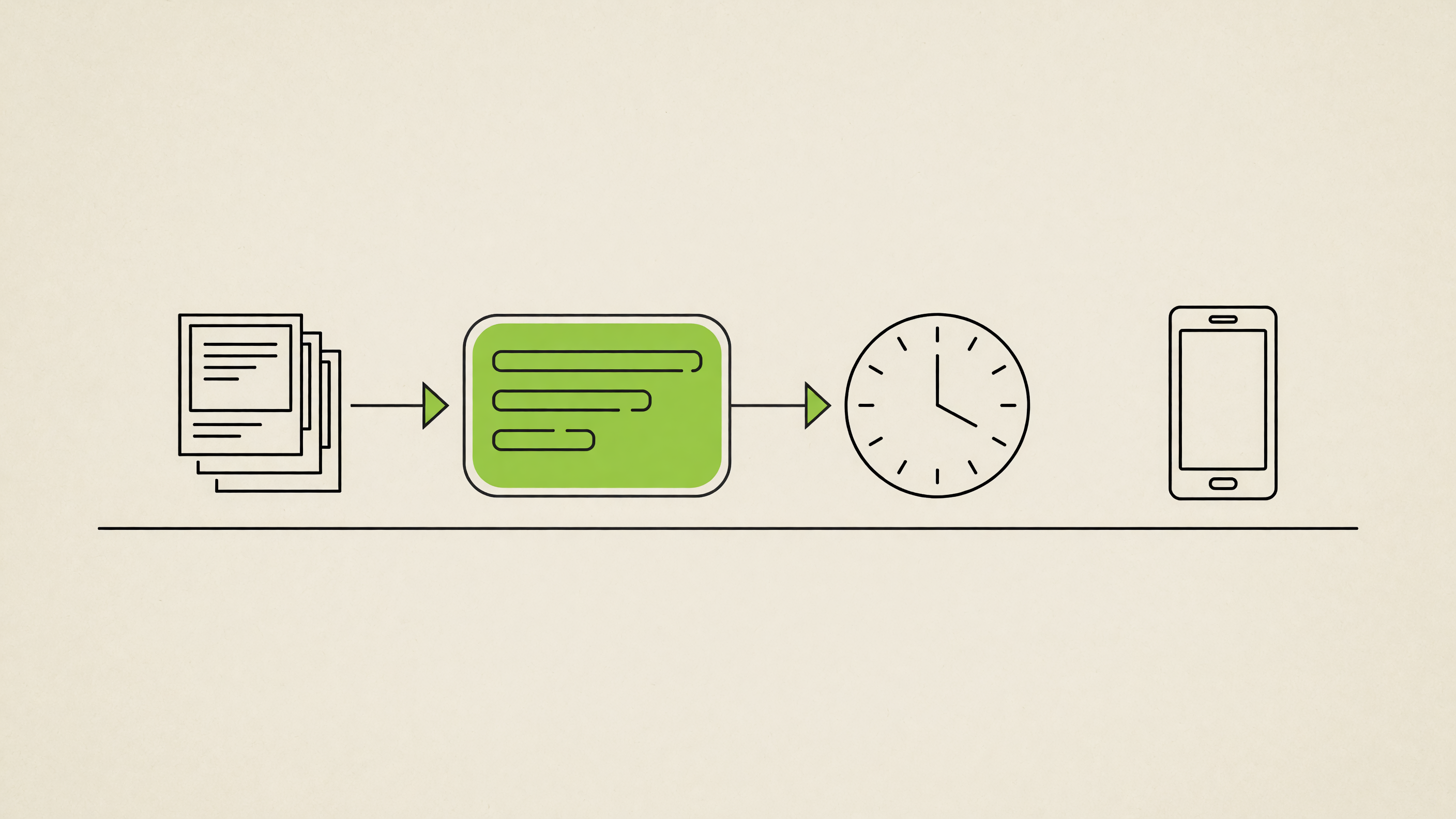
Stage one is asset supply. You need images you are allowed to use. For affiliate work this usually means seller-provided creative from the product listing, your own photographs of a product you bought, or generated imagery that does not misrepresent the product. The failure mode is quiet and expensive: pulling images from other creators' posts. TikTok's originality policy makes reused material without meaningful new contribution ineligible for the For You feed, and clips or images carrying someone else's watermark are called out explicitly. An account built on borrowed assets can look fine for weeks and then stop getting recommended with no warning and no notification.
Stage two is assembly. This is the part worth automating hardest, because it is pure repetition: apply a template, drop in the hook, place the slides, attach the caption, set the sound. The failure mode is template collapse, where every post looks identical and the account reads as automated to viewers. The fix is to vary the template systematically rather than to abandon templating.
Stage three is scheduling. Posting into a queue rather than by hand is what turns the account from a hobby into a measurable system, because a stable cadence is the only way to attribute a change in performance to a change in creative. The failure mode is bunching, meaning ten posts at once after three quiet days, which reads as spam behaviour and tells you nothing about which post worked.
Stage four is measurement, and it is the stage most faceless operators skip. You need the affiliate dashboard and the post analytics side by side, because reach and commission come apart constantly. A post with modest views and a high click rate is worth more than a post with ten times the reach and no taps, and the only way to see that is to look at both numbers against the same post.
The accounts that work are boring to run. Same queue, same slots, same measurement review every week. The interesting accounts are usually the ones about to stop being recommended.
Rhea Park, TikTok growth lead, Deeporax
What do the compliance rules require before you post?
There are three separate rule sets in play, they are enforced by different bodies with different consequences, and satisfying one does not satisfy the others.
The first is US law. The FTC's Endorsement Guides, codified at 16 CFR Part 255, require disclosure of any material connection between you and the brand you are promoting, which explicitly includes affiliate commission. The revision issued in October 2023 was the first substantial update since 2009: it broadened what counts as an endorsement, tightened the disclosure standard, and clarified that liability can attach to advertisers and intermediaries as well as to creators. The standard is that a disclosure must be clear and conspicuous, meaning hard to miss and easy for an ordinary viewer to understand, and in an interactive medium it should be unavoidable.
Practically, that means the word commission or a plain equivalent on the first slide and in the caption. A hashtag alone at the end of a long caption does not meet an unavoidability standard. This costs you nothing in performance and removes an entire category of risk.
The second rule set is TikTok Shop's own content policy, which is stricter than the law in several places and is enforced faster. Product claims, attributes and pricing must match the product detail page and the packaging. Medical claims are prohibited without the relevant certification, which rules out cure, treat and prevent language across the entire supplement and skincare space. Exaggerated or scientifically impossible claims are prohibited, as are filters or AI effects that fake a result. Disparaging comparisons against other products, brands or retailers are prohibited. Superlative pricing claims of the lowest-price-on-TikTok-Shop kind are prohibited. False claims that proceeds go to charity are prohibited.
Enforcement under the Creator Enforcement Policy is graduated and lands on your ability to earn: restrictions on shoppable posts, content removal, loss of product access, suspension of commission eligibility, and permanent removal from TikTok Shop for serious or repeated violations. Note that the penalty attaches to the account, not to the post, which is what makes a careless batch of ten near-identical slideshows genuinely dangerous.
The third rule set covers AI disclosure, and it has moved quickly. TikTok requires realistic AI-generated content to be labelled, and has layered several mechanisms on top of the creator-applied label: its own detection models, C2PA Content Credentials that let it read provenance metadata attached by other tools, and invisible watermarks applied to content made with TikTok's own AI tools or uploaded carrying Content Credentials. TikTok reports having labelled over 1.3 billion videos to date, and joined the C2PA Steering Committee in July 2026.
For a faceless affiliate operator the practical reading is that auto-detection will find generated imagery whether or not you declare it, so declaring it is free and hiding it is not. The place where AI generation crosses from labelling into prohibition is product representation: a generated image that shows a result the product does not produce is a misleading-content violation regardless of how it is labelled.
Does a disclosure hurt reach?+
No meaningful evidence suggests it does, and the risk asymmetry is severe. An honest commission disclosure on slide one costs a fraction of a second of viewer attention. An FTC enforcement matter or a TikTok Shop account restriction costs the entire revenue stream. Disclosure is also increasingly normal on the platform, so a labelled affiliate slideshow no longer reads as unusual to viewers. Treat it as a fixed part of the template rather than a decision you revisit per post, which also removes the chance of forgetting it during a high-volume production run.
Do I need to label a slideshow that uses AI-generated backgrounds but real product photos?+
Label it if any part of the imagery is realistic AI-generated content, because TikTok's rule attaches to realistic generated material rather than to whether the product itself was generated. A generated background that looks like a real photographed scene falls inside the rule. Beyond the label, the harder constraint is representation: the product must be shown accurately, so a generated environment that implies a result or a context the product does not deliver becomes a misleading-content problem separate from the labelling question. Label generously and represent the product honestly.
How should you read the numbers, and what benchmarks matter?
Affiliate slideshow performance is a four-stage funnel, and each stage fails for a different reason. Diagnosing the wrong stage is the most common reason an account plateaus for months.
Stage one is reach, which is governed by the hook and by account trust. Stage two is completion, meaning how far through the slides viewers get, governed by whether each slide earns the next swipe. Stage three is the product tap, governed by whether the slideshow gave a reason to buy and made the anchor visible. Stage four is conversion on the product page, which is largely out of your hands and belongs to the seller's listing, price and reviews.
| Funnel stage | What you are reading | Planning benchmark | If it is low, fix this |
|---|---|---|---|
| Reach | Impressions relative to your account's recent median | Within 2x of your trailing 30-post median | Slide one hook, and account trust if every post is affected at once |
| Completion | Share of viewers reaching the final slide | Above half on a five to seven slide post | Middle slides, slide count, and whether slide two justifies slide one |
| Product tap | Anchor clicks divided by views | Low single-digit percentages are normal and healthy | Whether you gave a reason to buy, and whether the final slide points at the anchor |
| Conversion | Orders divided by anchor clicks | Set by the seller's listing, not by your creative | Change the product, not the slideshow |
Deeporax first-party planning benchmarks aggregated across faceless slideshow accounts. These are operating targets for diagnosis, not measured platform averages, and they vary widely by category.
The most valuable habit here is comparing a post against your own trailing median rather than against an absolute number. Reach on TikTok is noisy enough that a single post tells you nothing. A block of ten posts against your own baseline tells you a great deal.
Aggregate pattern across faceless accounts, offered as a pattern rather than a measured result: the accounts that stall almost always stall at stage three, not stage one. They produce reach comfortably, because hooks are the thing everyone practises, and then they never give the viewer a reason to tap. The slideshow is entertaining, the product is present, and nothing in the sequence connects the two. The fix is structural rather than creative: add an explicit comparison or decision slide before the anchor, so the viewer arrives at the final slide with a choice to make.
Captions deserve their own measurement note. Because photo posts are text-bearing and TikTok functions as a search surface, a meaningful share of a slideshow's lifetime views can arrive weeks after publication through search rather than through the For You feed. That changes how you evaluate a post: a slideshow judged dead at 48 hours may still be accumulating commission at day thirty.
Finally, hold your revenue number loosely for the first month. Commission is paid on net sales after a settlement window, so returns land after the dashboard has already shown you a total. Categories with high return rates, apparel most of all, can move a monthly figure materially once returns settle.
What breaks at scale, and how do you keep it from breaking?
Everything described so far works at three posts a day on one account. The failure modes that appear at thirty posts a day across several accounts are different in kind, not just in degree.
The first is template collapse. Volume production converges on whatever template performed best last month, and the account's entire output starts to look like one post repeated. This trips two separate things at once: viewers stop swiping because they have seen the shape before, and TikTok's originality policy treats minimally differentiated output unkindly. The mitigation is to keep several structurally distinct templates in rotation and to retire any template that has carried more than a modest share of a week's posts.
The second is product concentration. Building forty slideshows around one high-performing product feels efficient until the seller changes the commission rate, runs out of stock, or gets the product pulled from the affiliate catalogue over review rates or an IP complaint. Every one of those posts keeps its views and earns nothing. Spread production across a product family rather than a product.
The third is the compliance blast radius. Because enforcement attaches to the account rather than to the individual post, a claim that survives review in one slideshow and is then propagated across a batch of thirty turns a single creative error into an account-level event. This is the strongest practical argument for keeping a written claims list per product: the sentences you have decided are true and permissible, reviewed once, reused deliberately.
The fourth is measurement decay. At low volume you can hold the picture in your head. At high volume you cannot, and without a weekly review that puts reach and commission against the same post, the operation drifts into producing whatever is easiest rather than whatever earns. Book the review before you scale the output.
Illustrative operating model, not a measured case: an account running a mature slideshow pipeline keeps three templates live, rotates a hook library of several dozen openers, works a product family of six to eight related items rather than a single hero product, publishes on a fixed daily schedule, and reviews reach against commission every Monday. Nothing in that description is clever. All of it is the difference between an account that compounds and an account that produces content.
The last thing worth saying is that the format advantage is real but not permanent. Photo posts out-engage video today partly because relatively fewer people make them well. The operators who will still be earning in two years are the ones who treated slideshows as a distribution channel with rules worth learning, rather than as a loophole worth exploiting before it closes.
Common questions about TikTok Shop affiliate slideshows.
Fifteen questions, grouped from the basics through implementation to the problems that show up once you are running volume.
What is a TikTok Shop affiliate slideshow?+
It is a TikTok photo post, meaning a swipeable set of still images rather than a video, with a TikTok Shop product anchor attached so that you earn commission on sales it drives. You select a product from the affiliate marketplace, build the slides around a reason to buy, attach the product, and disclose the commercial relationship. The format matters because photo posts are cheap to produce and draw high engagement, and because still images carry readable text, which suits products whose value is explained rather than demonstrated.
Do I need followers to join the TikTok Shop affiliate program?+
Yes, but fewer than most people expect. TikTok Shop's Creator Eligibility Policy sets the US entry bar at 1,000 followers, along with being at least 18 years old, based in the US, and passing identity verification. Creators who join below 5,000 followers are placed in an Affiliate Creator Pilot Program for at least 30 days, which restricts product access, caps shoppable posts at three per day, and limits shoppable LIVE sessions to three per week. Requirements differ by market, so check the policy for your country before planning around these numbers.
How much do TikTok Shop affiliates actually earn per sale?+
It depends entirely on the product, because sellers set their own commission rates rather than TikTok setting a platform rate. Category trackers generally report open-plan rates clustering in the low teens as an overall average, with beauty and wellness products sitting at the higher end and electronics at the lower end. Targeted collaborations, which are invite-only and negotiated directly with sellers, typically pay more than open plans. The only rate that matters for planning is the one attached to the specific product you are promoting, visible in the affiliate marketplace before you commit production time.
Can I do this without showing my face or my voice?+
Yes, and the slideshow format is unusually well suited to it. A photo post carries its argument through images and on-screen text, so there is no presenter to replace and no voiceover required. You need images you are entitled to use, which in practice means seller-provided listing creative, your own photographs, or generated imagery that represents the product accurately. The constraint is not anonymity but originality: TikTok's policies make reused material without meaningful new contribution ineligible for recommendation, so a faceless account still has to actually make something.
When do I get paid, and can commission be taken back?+
Commission is held through a settlement period before release, and it is paid on net sales, which means returns and chargebacks are deducted before you receive anything. So yes, an amount showing in your dashboard can decrease. This matters most in high-return categories such as apparel, where a strong-looking month can settle materially lower. The practical discipline is to treat the first thirty days of any revenue figure as provisional, and to make decisions about which products to keep promoting on settled numbers rather than on dashboard forecasts.
How many slides should an affiliate slideshow have?+
Five to seven works best for affiliate content. Completion rate, meaning the share of viewers who reach the final slide, is a primary signal for carousels, and longer slideshows dilute it without adding persuasion. Below five slides you lack room to establish a problem, show a resolution and present a decision. Above seven, you are usually spending swipes on material that does not move the buying decision. Structure matters more than count: open on a problem or a claim, build through comparison or demonstration, and point explicitly at the product anchor on the final slide.
How do I add the product link to a photo post?+
You attach the product during the posting flow, selecting it from your affiliate showcase before publishing, the same way you would for a video. If the option does not appear, the usual causes are that your affiliate application has not been approved yet, that you are still inside the pilot period and have hit the daily shoppable post cap, or that the specific product is not available to your account tier. Check your creator status in TikTok Shop before assuming it is a bug, and confirm the product is still listed in the affiliate catalogue.
How many affiliate slideshows should I post per day?+
Three per day is both the pilot-period cap for accounts under 5,000 followers and a sensible ceiling for a new account regardless of eligibility. High volume from a young account is itself a risk signal, and it also destroys your ability to measure, because you cannot attribute performance changes when everything changes at once. Establish a fixed daily cadence, hold it steady for a few weeks to build a baseline, then increase gradually. A stable schedule is worth more than a high one, since attribution depends on consistency.
What images am I allowed to use for products I do not own?+
Seller-provided listing creative is the safest source, since sellers supply it precisely so affiliates can promote the product. Your own photography is next best. Generated imagery is permitted if it represents the product accurately and is labelled where TikTok's AI disclosure rules apply. What you cannot do is pull images from other creators' posts. TikTok's originality policy makes reused material without meaningful new contribution ineligible for the For You feed and specifically flags content carrying someone else's watermark, and the penalty arrives as a quiet loss of recommendation rather than a notification.
How do I disclose the commission properly?+
Put a plain statement that you earn commission on the first slide and in the caption. The FTC's Endorsement Guides require any material connection to be disclosed clearly and conspicuously, and in an interactive medium the disclosure should be unavoidable, which a hashtag buried at the end of a long caption is not. Affiliate commission is explicitly a material connection. Build the disclosure into your template so it cannot be forgotten during a high-volume run, and use ordinary language rather than jargon an average viewer would not parse.
My slideshows get views but no clicks. What is wrong?+
You are failing at the product-tap stage, which is the most common plateau. The usual cause is that the slideshow entertains without ever giving a reason to buy, so viewers reach the end satisfied rather than curious. Two structural fixes work reliably. First, add an explicit comparison or decision slide before the anchor, so the viewer arrives at the end with a choice to make rather than a purchase to resist. Second, make the final slide point at the product anchor directly, because viewers who want the product still need to be told where to tap.
My shoppable posts stopped getting reach. What happened?+
When every post drops at once rather than individual posts underperforming, the problem is account-level rather than creative. The likeliest causes are an originality issue, meaning your assets are reused or minimally differentiated, a template that has converged so tightly that output reads as automated, or an enforcement action against the account under TikTok Shop's Creator Enforcement Policy. Check your account status and any policy notifications first, then audit your last twenty posts for asset reuse and template sameness. Creative fixes will not help if the cause is enforcement.
TikTok removed my post for misleading content. How do I fix it?+
Identify which specific claim triggered it before republishing anything, because reposting the same claim escalates the enforcement rather than resetting it. The frequent triggers are medical claims of the cure, treat or prevent kind without certification, product attributes or pricing that do not match the product detail page, exaggerated or scientifically impossible claims, superlative pricing claims, and filters or AI effects that fake a result. Rewrite the claim to something you can substantiate from the listing itself, then check whether the same sentence appears in other posts in the batch and fix those too.
My commission was clawed back. Can I prevent that?+
Not entirely, because commission is paid on net sales and returns are deducted after the fact, which is a structural feature of the program rather than an error. What you can control is your exposure to it. Promote products with low return rates, which usually means avoiding apparel and sizing-dependent items when you are starting out. Check a product's review profile before building a batch around it, since poor reviews predict returns. And set honest expectations in your slides, because the fastest route to a return is a buyer who expected something the product does not do.
My account got restricted from TikTok Shop. What now?+
Read the specific enforcement notice first, since TikTok Shop's Creator Enforcement Policy is graduated and the remedy depends on the tier. Restrictions range from limits on shoppable posts and loss of product access through suspension of commission eligibility, up to permanent removal for serious or repeated violations. Follow the appeal process in the notice if one is offered, and use the interval to audit every recent post for the same violation, because penalties attach to the account rather than to the individual post. Do not open a new account to route around a restriction.
Sources.
- eMarketer, TikTok Shop makes up nearly 20% of social commerce in 2025 (US TikTok Shop sales, growth rate and share of social commerce)
- eMarketer, FAQ on social commerce: how creators and platforms power shopping in 2026 (2026 US forecasts and creator-driven commerce)
- Retail Dive, TikTok Shop drives social commerce growth (independent reporting on the eMarketer forecast)
- Fanpage Karma Insights, Performance check: carousels versus videos (sample size, date range and TikTok engagement, likes and shares comparisons)
- TikTok Shop Seller Center, Creator Eligibility Policy (follower thresholds, pilot program duration and shoppable post caps)
- TikTok Shop Seller Center, Creator Enforcement Policy (graduated penalties, commission restriction and removal)
- TikTok Shop Seller Center, Content Policy (rules governing shoppable content)
- TikTok Shop Seller Center, How to avoid misleading content (claim matching, medical claims, faked results and pricing claims)
- TikTok Shop Seller Center, Prohibited content for platform safety (categories of prohibited promotional behaviour)
- TikTok Shop Seller Center, How to avoid promoting prohibited products (product-level restrictions for affiliates)
- TikTok Shop Seller Center, Policy Pulse May 2026 (recent affiliate and product policy updates)
- Federal Trade Commission, Endorsements, influencers and reviews (material connection and disclosure obligations)
- Federal Trade Commission, The FTC's Endorsement Guides: what people are asking (clear and conspicuous standard in interactive media)
- eCFR, 16 CFR Part 255, Guides concerning use of endorsements and testimonials in advertising (the codified rule text)
- TikTok Newsroom, Partnering with our industry to advance AI transparency and literacy (C2PA Content Credentials, invisible watermarks and labelling volume)
- TikTok Support, AI-generated content (creator labelling requirements)
- C2PA, Does TikTok support Content Credentials? (provenance support and steering committee membership)
- TikTok Creator Academy, Understanding TikTok's originality policy (reused content and For You feed ineligibility)
- TikTok Community Guidelines, Integrity and authenticity (spam, deceptive behaviour and platform manipulation)
- Search Engine Land, Survey: 51% of Gen Z women prefer TikTok, not Google, for search
- Chain Store Age, Survey: Gen Z favors Instagram, TikTok over Google for product discovery
- eMarketer, TikTok is winning over Gen Z searchers (search behaviour on TikTok)
- Deeporax first-party planning benchmarks aggregated across faceless slideshow accounts, used for the funnel diagnosis table and the illustrative operating patterns
MT
Written by
Matt Torres
Matt builds the pipelines behind Deeporax, the slideshow automation platform. He spends most of his time on the unglamorous half of creator monetization: product feeds, posting queues, disclosure defaults, and the accounting that tells you whether a format is actually profitable.