Loading the homepage
Blog/Account growth
100+ slideshow hooks that stop the scroll.
140+ first-slide hooks organized by the psychology behind them, plus fill-in-the-blank formulas and a swipe file for every niche.
Deeporax
The Deeporax team
Reviewed by Rhea Park, TikTok growth lead
Published Jun 28, 2026 · Updated Jul 25, 202622 min read · fact-checked
Key takeaways
- The first slide decides the post. Nothing on slides two through nine matters if nobody swipes past slide one.
- The strongest hooks all lean on a small set of documented psychological triggers: curiosity gaps, open loops, negativity bias, loss aversion, social proof, self-reference, specificity, and pattern interrupts.
- This guide hands you 140+ ready-to-adapt hooks across 11 psychological categories and 10 niches, plus 16 fill-in-the-blank formulas for building your own.
Why your first slide is the whole game.
A TikTok slideshow lives or dies on its first slide. If the opening line doesn't earn a swipe in roughly the first three seconds, nothing on slides two through nine matters, because almost nobody gets there. This guide breaks down why certain hooks pull people in, the research behind each pattern, and hands you more than 140 of them, organized by category instead of dumped in one long list.
The pressure on that first slide is bigger than most creators assume. TikTok's own guidance to advertisers tells them to introduce the content proposition in the first three seconds for better recall, and most scroll-away decisions happen before that mark (TikTok for Business creative guidelines, via Teleprompter, 2026). Independent trackers estimate the average viewer's attention window at somewhere between 1.7 and 3 seconds before they decide whether to keep watching or keep scrolling (AutoFaceless, 2026; SQ Magazine, 2026). Those numbers vary by source and none of them are TikTok's official published metric, but they all point the same direction: the decision happens fast, and it happens on slide one.
By the end of this guide you'll have a working vocabulary for the psychological triggers behind curiosity, urgency, and trust, a swipe file of 140+ ready-to-adapt hooks across eleven categories and ten niches, and a set of fill-in-the-blank formulas you can run any topic through in about thirty seconds. This is built from patterns we track across the faceless slideshow accounts running on Deeporax, checked against the actual research the hooks lean on, not just what feels true.
What actually happens in the three seconds after someone opens your slideshow.
Short answer: your first slide is competing with a scroll gesture that's already in motion, not a blank page. The viewer's thumb is mid-swipe from the last post before they even register your caption text, which is why a hook has to interrupt, not just inform.
Slideshows behave differently from video here in one useful way. A viewer chooses their own pace through a carousel, and industry trackers describe photo-mode posts holding attention for meaningfully longer stretches than an auto-playing clip covering the same topic, because the reader is actively reading rather than passively watching (Metricool, 2026). That's an advantage for a well-written hook and a real cost for a weak one: a slow-moving video might still catch someone on slide four of the story, but a slideshow that opens flat gets closed on slide one, full stop.
Search behavior compounds this. Adobe's 2026 survey found 49 percent of US consumers had used TikTok as a search engine, up from 41 percent in 2024, and 65 percent of Gen Z respondents specifically (Adobe, 2026, via Rise at Seven). That means a meaningful share of your audience is arriving from a search query rather than a passive scroll, and a hook that matches the actual question someone typed does double duty: it stops the scroll and it answers the search intent in the same line.
None of this means chase a formula blindly. It means the hook is the highest-leverage sentence you'll write for any given post, worth more editing time than the other nine slides combined.
The eight psychological triggers behind every hook that works.
Every hook in this guide leans on one of eight documented triggers from behavioral psychology. Knowing them means you can build new hooks for a niche this guide doesn't cover, and diagnose why a hook that worked last month suddenly stopped.
| Trigger | The mechanism |
|---|---|
| Curiosity gap | Awareness of a gap between what you know and want to know creates a felt sense of deprivation, and the brain is motivated to close it (Loewenstein, 1994; Golman & Loewenstein, 2016). |
| Zeigarnik effect (open loops) | Unfinished tasks and stories stay active in working memory far longer than completed ones, first documented by Bluma Zeigarnik in 1927 watching waiters recall open tabs better than closed ones. |
| Negativity bias | Negative or threatening information gets processed faster and held onto longer than neutral or positive information, across cultures (Soroka, Fournier & Nir, PNAS, 2019). |
| Loss aversion | Losses are felt roughly twice as strongly as equivalent gains, so a hook framed around missing out on something beats one framed around gaining the same thing (Kahneman & Tversky, 1979). |
| Social proof | People resolve uncertainty by watching what others do, especially many others or similar others, which is why a crowd-shaped hook outsources the reader's judgment (Cialdini; Milgram, Bickman & Berkowitz, 1969). |
| Self-reference effect | Information framed around the self is encoded and recalled more readily than information about someone else, which is the entire reason 'you' and 'POV' hooks outperform third-person phrasing (self-reference effect literature; Cunningham et al., 2024). |
| Specificity and numeracy | Numbers and concrete detail read as more credible than vague claims, even when the underlying point is identical; odd numbers in particular chunk information in a way the brain processes more easily (Tompkins meta-analysis, via Medium, 2024). |
| Pattern interrupt | The brain is wired to notice deviation from an expected rhythm, which is why a hook that breaks the tone of the five posts before it gets noticed before it's even understood (PMC, 2017). |
Every category below names which of these eight is doing most of the work, though the strongest hooks usually stack two or three at once. A hook like "73 percent of renters break this lease clause without knowing it" is a data hook and a warning hook running together, which is exactly why it's worth noticing which combinations show up twice in your own best-performing posts.
Curiosity gap hooks.
A curiosity gap hook names that something exists without revealing what it is. It works because partial knowledge is more motivating than total ignorance: once you know a specific question exists, and sense the answer is reachable, the gap becomes concrete and the tension to close it takes over (Loewenstein, 1994). The failure mode is naming a gap so vague it doesn't feel reachable, which reads as clickbait instead of a promise.
| Hook example |
|---|
| The reason your posts get 200 views and hers get 2 million isn't the algorithm. |
| There's one line in your bio that's quietly killing your reach. |
| Nobody tells you this about TikTok Shop before you sign up. |
| The real reason airlines never tell you which seat to pick. |
| What flight attendants notice about you in the first 10 seconds. |
| The one grocery store item that's marked up 400 percent. |
| Why your landlord never mentions this clause. |
| The three words that get you out of almost any awkward text. |
| What your dentist isn't allowed to tell you. |
| The hidden setting on your phone almost nobody turns on. |
| Why some people never seem to get sick, and it's not their immune system. |
| The real reason your ex came back, and it's not what you think. |
Open loop and story hooks.
An open loop hook drops the viewer into the middle of a scene before it's resolved. It borrows the Zeigarnik effect directly: an unfinished story creates cognitive tension the brain wants to close, which is why the classic waiters in Zeigarnik's original 1927 study could recall the exact orders on open tabs but forgot them the moment the bill was paid. Open the story, don't summarize it, and let slide two carry the resolution.
| Hook example |
|---|
| I got fired on a Tuesday. By Friday I understood why it was the best thing that happened to me. |
| She handed me a note before she left the restaurant. I didn't read it until I got home. |
| My grandmother said one sentence before she passed, and I think about it every single day. |
| I almost didn't take this job. Here's what happened three weeks in. |
| The interview was going fine until they asked me this one question. |
| I found this in my dad's wallet after he passed away. |
| We were 20 minutes from calling off the wedding. |
| The text came in at 2am and changed how I see my best friend. |
| I quit my six-figure job with no plan. This is what happened next. |
| The last thing my therapist said to me before I stopped needing therapy. |
Contrarian and myth-busting hooks.
A contrarian hook states the opposite of common advice, flatly, with no hedging. It works as a pattern interrupt: the brain is tuned to expect a certain rhythm from a niche's usual content, and a hook that violates that expectation gets noticed before it's even evaluated (PMC, 2017). The catch is that it only works if the contrarian claim is actually defensible on slide two, or it reads as bait rather than a real reframe.
| Hook example |
|---|
| Stop drinking a gallon of water a day. It's not helping you. |
| Waking up at 5am is not what made me successful. |
| You don't need to hustle harder. You need to quit three things. |
| Cardio is not the best way to lose fat, and never was. |
| Being 'too nice' isn't your problem. This is. |
| Your resume isn't the reason you're not getting hired. |
| Saving 20 percent of your income won't make you rich. |
| You don't have a communication problem in your relationship. |
| Meal prepping on Sundays is why you keep quitting your diet. |
| The 10,000 steps rule was never based on real research. |
Listicle and numbered hooks.
A numbered hook promises a specific, countable set of things. A meta-analysis of over 300 pieces of online content found readers absorb information better when it's chunked into parcels of three or five, and that the brain struggles to hold more than about nine items in a row without a structure to lean on (Tompkins meta-analysis, via Medium, 2024). Odd numbers in particular are widely reported to outperform even ones, likely because they read as curated rather than padded out to a round figure.
| Hook example |
|---|
| 5 things I wish I knew before my first apartment. |
| 7 red flags I ignored in my last relationship. |
| 3 sentences that instantly make you sound more confident. |
| 9 signs your body is quietly asking for help. |
| 5 purchases under $30 that changed my daily routine. |
| 11 things therapists never say out loud but always think. |
| 3 habits that quietly separate the top 1 percent from everyone else. |
| 7 things I stopped buying that saved me $400 a month. |
| 5 phrases to never say to your kids, even when you're furious. |
| 9 things flight attendants always pack that you don't. |
Warning and cautionary hooks.
A warning hook frames the post around avoiding a loss rather than gaining something. Two things stack here: negative or threatening information gets processed faster and remembered longer than neutral information across every culture studied (Soroka, Fournier & Nir, PNAS, 2019), and losses are felt roughly twice as strongly as an equivalent gain, per Kahneman and Tversky's original 1979 prospect theory work. A hook framed as "don't lose this" reliably beats the same information framed as "gain this."
| Hook example |
|---|
| If you do this before bed, stop tonight. |
| This common habit is quietly wrecking your credit score. |
| Don't sign a lease until you read this. |
| The mistake that cost me $9,000 in my first year of business. |
| If your partner does this, it's not a small thing. |
| Stop taking this supplement until you read the label again. |
| This is why your plants keep dying, and it's not the water. |
| Never say this in a job interview, even as a joke. |
| The warning sign I ignored for six months before my diagnosis. |
| If you're doing this with your savings account, you're losing money. |
Transformation and before-after hooks.
A transformation hook states a concrete starting point and a concrete ending point in the same sentence. Specificity is doing the work here, the same reason a number in a headline reads as more credible than a vague claim describing the identical outcome. "$340 in savings" is more believable than "finally saved money" even when both sentences are true, because the specific version signals the writer actually lived it.
| Hook example |
|---|
| I went from $340 in my checking account to my first $10k saved. Here's the exact order I did it in. |
| 6 months ago I couldn't run for a bus. Last weekend I finished a 10k. |
| This is what my apartment looked like before and after I learned one folding method. |
| I used to cancel plans every weekend. This is what changed. |
| From sleeping 4 hours a night to actually waking up rested, no supplements. |
| My skin before and after I stopped doing the one thing every dermatologist warns about. |
| I couldn't hold a conversation without over-explaining myself. Now I don't. |
| This spreadsheet took me from paycheck to paycheck to three months of savings. |
| Before: anxious every Sunday night. After: I changed one thing about my job search. |
| I used to avoid mirrors. This is the year that changed. |
Social proof hooks.
A social proof hook names a crowd instead of asserting a claim yourself. In a classic 1969 field experiment, a single person looking up at the sky drew almost no attention, but the same act performed by a group of fifteen stopped 40 percent of passersby (Milgram, Bickman & Berkowitz, 1969, cited in Cialdini). A hook that names "every nurse I asked" or "40,000 people" is doing the same thing: outsourcing the reader's judgment to a crowd they trust more than a stranger's opinion.
| Hook example |
|---|
| Every therapist I've ever talked to recommends this one book. |
| 40,000 people saved this post last week. Here's why. |
| The productivity method every founder I know secretly uses. |
| I asked 100 couples married over 20 years for their best advice. These 5 answers repeated. |
| Every flight attendant I've met packs this exact item. |
| The skincare routine every dermatologist uses on themselves. |
| I asked every nurse I know what they'd never do in a hospital. Same answer, every time. |
| The one grocery habit every dietitian I know actually follows. |
FOMO and scarcity hooks.
FOMO hooks work on a real and well-documented anxiety, not a marketing invention. One study reported that 56 percent of social media users experience fear of missing out when disconnected from their accounts, and researchers trace the root cause to an inherited need to belong, since exclusion from group knowledge or activity was genuinely costly for early humans (PMC, 2025). A scarcity-framed hook activates that same wiring around information instead of belonging.
| Hook example |
|---|
| This deal is quietly ending before the sale everyone's waiting for even starts. |
| If you don't know this before open enrollment, you're leaving money on the table. |
| The window to fix this on your credit report closes faster than people think. |
| Everyone in this niche already knows this. If you don't yet, you're behind. |
| This app feature disappears for free users next month. |
| The last season this place will be this empty before it gets discovered. |
| If you haven't set this up before tax season, you're already behind. |
| This trick only works while the algorithm still rewards it, and that window is closing. |
POV and identity callout hooks.
A POV or identity hook names the viewer directly instead of describing a general topic. The self-reference effect is one of the more replicated findings in memory research: information framed around the self, or addressed to "you," is encoded and recalled more readily than the identical information framed about someone else (self-reference effect literature; Cunningham et al., 2024). A hook that names a specific identity, "the friend who plans everything," "the one who checks their bank account with one eye closed," recruits that effect in a single line.
| Hook example |
|---|
| POV: you're the friend who always plans everything and nobody notices. |
| If you were the 'responsible one' growing up, this is for you. |
| For the girl who's tired but can't explain why. |
| You, if you've ever apologized for taking up space in a meeting. |
| POV: you just found out the habit you thought was healthy wasn't. |
| If you check your bank account with one eye closed, watch this. |
| For anyone who was always 'the mature one' in the friend group. |
| You, at 2am, googling symptoms you definitely don't have. |
Question hooks.
A question hook forces a small, automatic act of mental engagement, the reader answers or wonders before they consciously decide to. It's a curiosity gap and an open loop running at the same time: the question names a gap in the viewer's knowledge and leaves it visibly unresolved until slide two. The main failure mode is asking a question with an obvious or trivial answer, which closes the loop instantly instead of opening it.
| Hook example |
|---|
| Why does everyone suddenly look better in natural light except you? |
| What if the reason you're tired isn't sleep at all? |
| Ever notice how some people never seem stressed about money? |
| What would happen if you didn't check your phone for one hour? |
| Why do some couples never seem to fight, even in public? |
| What's the one thing wealthy people do differently with a $20 bill? |
| Why does your dog do this one thing right before it rains? |
| What if the reason nobody's texting back has nothing to do with you? |
Data and statistic hooks.
A data hook leads with a specific number instead of a general claim. Numbers read as more credible than vague language even describing the same underlying fact, because a specific figure signals the writer actually measured something rather than guessed (headline specificity research). Odd or unrounded numbers, 73 percent instead of a clean 75, tend to read as more precise and less manufactured, which is worth keeping in mind when you're the one filling in the blank.
| Hook example |
|---|
| 73 percent of people do this wrong the first time they negotiate salary. |
| The average person spends years of their life scrolling. Here's what to do with that time instead. |
| 1 in 3 renters are breaking this lease clause without knowing it. |
| Only 12 percent of people know this one tax deduction exists. |
| The average couple has this exact fight dozens of times a year. |
| 9 out of 10 dermatologists agree on this, and almost nobody does it. |
| It takes 66 days to build a habit, not 21. Here's what that actually looks like. |
| Less than 5 percent of people ever negotiate their rent. Here's the script that works. |
Niche-specific hook packs.
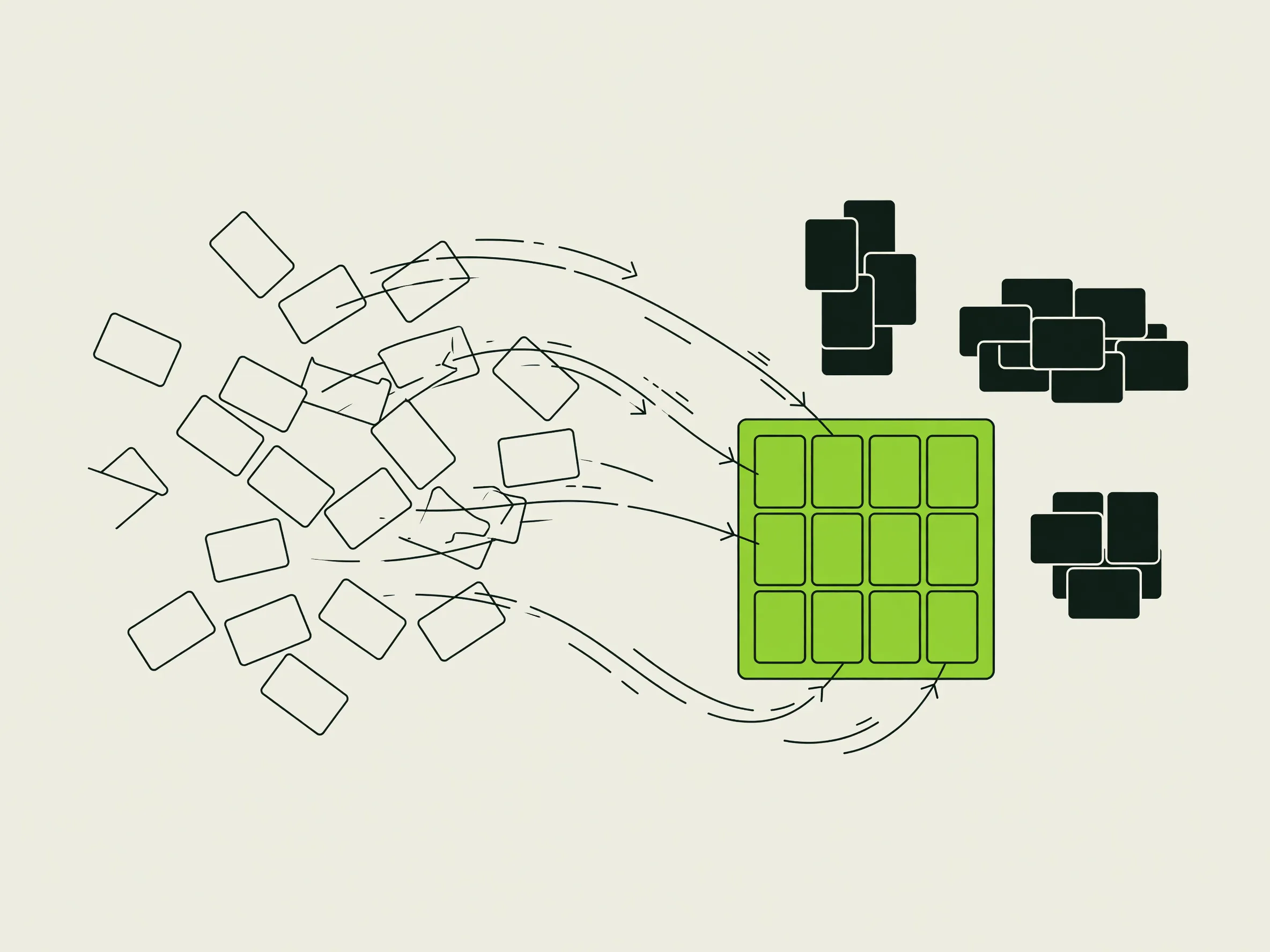
The eleven categories above are the mechanisms. This section is the shortcut: forty hooks already adapted to ten of the most common faceless slideshow niches, so you can lift one, swap a detail, and post it today instead of reverse-engineering a formula from scratch.
| Niche | Hook example |
|---|---|
| Personal finance | The $5 rule that quietly paid off my credit card in 8 months. |
| Personal finance | Why your 'emergency fund' might actually be costing you money. |
| Personal finance | The subscription audit that found me $87 a month I didn't know I was losing. |
| Personal finance | 3 numbers your bank statement is trying to tell you. |
| Fitness and health | The exercise physical therapists actually recommend over crunches. |
| Fitness and health | Why your workout isn't working, and it's not your diet. |
| Fitness and health | The stretch every desk worker needs and skips. |
| Fitness and health | What your resting heart rate is actually telling you. |
| Relationships and dating | The text that ends almost every situationship, for better or worse. |
| Relationships and dating | 3 things to notice on a first date that matter more than chemistry. |
| Relationships and dating | Why 'we're just talking' never has a clear ending. |
| Relationships and dating | The apology that actually works, and the one that never does. |
| Home and organization | The one drawer that's secretly making your kitchen feel smaller. |
| Home and organization | Why your closet never stays organized, and it's not a discipline problem. |
| Home and organization | 5 minutes a day that replaced my entire Sunday cleaning routine. |
| Home and organization | The storage mistake that's attracting bugs without you knowing. |
| Beauty and skincare | The order you're applying skincare in might be undoing all of it. |
| Beauty and skincare | Why your foundation looks different by 2pm every day. |
| Beauty and skincare | The $12 product dermatologists quietly recommend over $80 serums. |
| Beauty and skincare | One ingredient combo that's aging your skin faster. |
| Food and recipes | The one substitution that fixed my dry chicken forever. |
| Food and recipes | Why restaurant rice tastes different, and it's one extra step. |
| Food and recipes | 3 pantry staples that go bad faster than you think. |
| Food and recipes | The trick chefs use so garlic never burns. |
| Pets | The one sound your dog makes that vets say to never ignore. |
| Pets | Why your cat knocks things off the table on purpose. |
| Pets | 3 human foods that seem safe for dogs but aren't. |
| Pets | The walk schedule that fixed my dog's anxiety in two weeks. |
| Career and productivity | The email trick that got me three job offers in one month. |
| Career and productivity | Why your to-do list keeps getting longer, not shorter. |
| Career and productivity | The one Slack habit that quietly makes you look junior. |
| Career and productivity | 3 questions to ask in an interview that change how you're seen. |
| Parenting | The phrase that stopped my toddler's tantrums faster than time-outs. |
| Parenting | Why 'good job' might be the wrong thing to say to your kid. |
| Parenting | 3 things pediatricians wish parents asked about more. |
| Parenting | The bedtime routine that finally got my 4-year-old to sleep through the night. |
| Travel | The seat flight attendants never want you to pick. |
| Travel | Why your flight got more expensive the second time you checked it. |
| Travel | 3 things to screenshot before you land in a new country. |
| Travel | The carry-on packing order that saved me at security every time. |
The hook formula swipe file.
Once a category stops feeling new, the fastest move isn't finding more finished hooks, it's building your own from a formula. These sixteen are the skeletons underneath most of the hooks above. Fill in the blanks with your niche's specifics and you have a hook in under a minute.
| Formula | Filled-in example |
|---|---|
| The [number] [things] that [outcome], and [surprising qualifier]. | The 3 habits that quietly wrecked my sleep, and none of them were caffeine. |
| POV: you're the [identity] who [specific relatable behavior]. | POV: you're the friend who remembers everyone's order but not your own bank balance. |
| Nobody tells you this about [topic] before you [action]. | Nobody tells you this about renting before you sign. |
| I [did unexpected thing]. Here's what happened [timeframe] later. | I deleted every app off my phone. Here's what happened 30 days later. |
| Stop [common behavior]. It's not [assumed reason]. | Stop stretching before your run. It's not helping your muscles. |
| The [percentage] of people who [outcome] all do this one thing. | The 12 percent of people who actually stick to their budget all do this one thing. |
| If you [specific relatable action], this is for you. | If you reread texts before sending them, this is for you. |
| What [authority figures] actually [do or say] about [topic]. | What therapists actually say when a client cancels last minute. |
| The [item or habit] that's quietly costing you [specific cost]. | The subscription that's quietly costing you $340 a year. |
| I asked [number] [experts or people] about [topic]. [Number] said the same thing. | I asked 50 nurses what they'd never eat from a hospital cafeteria. 41 said the same thing. |
| [Number] signs [subject] is [hidden state]. | 7 signs your 'fine' relationship isn't actually fine. |
| The mistake that cost me [specific outcome]. | The mistake that cost me my security deposit. |
| Why [common assumption] is wrong, according to [source type]. | Why the eight-glasses-a-day rule is wrong, according to actual hydration research. |
| This is what [timeframe] of [habit] actually does to [subject]. | This is what 90 days of no spending actually does to your bank account. |
| The one [question] that [outcome]. | The one question that ended every argument with my mom. |
| [Number] things I wish I knew before [milestone]. | 5 things I wish I knew before my first year of marriage. |
Formulas synthesized from patterns across the hook categories above.
Mistakes that quietly kill a good hook.
The most common failure isn't a bad hook, it's a good hook that the rest of the post doesn't pay off. If slide one promises a specific number or a specific reveal and slide four wanders somewhere else, completion rate drops on that post and, over time, on the account, since TikTok's ranking signals weigh watch time and completion heavily (industry algorithm trackers, 2026). A hook is a promise, and a broken promise costs more than a boring one.
The second failure is vagueness dressed up as intrigue. "You won't believe what happened next" names no gap at all, which is why it reads as clickbait instead of curiosity: there's nothing specific enough for the brain to feel motivated to close. Every strong hook above names a person, a number, a timeframe, or an object. The vaguer version of the same hook is almost always weaker, not stronger.
The third is repetition without rotation. Reusing the exact same hook daily reads as automated to a regular viewer, and a hook pool with no memory of what's already run tends to drift back toward the same three or four favorites without anyone noticing. That's the specific problem a rotating hook pool solves, covered next.
Turning this list into a system instead of a one-time swipe file.
A list of 140 hooks is only useful if it actually gets used, in rotation, without someone manually checking what ran last week. The practical version of that is a hook pool: every hook above tagged by category and niche, with a scheduler that pulls a fresh one for each post instead of a person guessing from memory.
I stopped rewriting hooks from scratch every morning and just built a pool from three categories. The account stopped feeling repetitive, and I stopped feeling burned out writing the same three sentences a different way.
devon, Deeporax user
This is the exact gap Deeporax is built to close: sourcing images, pulling a hook from a rotating pool tagged to your niche, laying out the slides, and publishing on schedule, so a hook pool actually gets used instead of sitting in a notes app. For the rest of the pipeline, our guide on how to automate TikTok slideshows with AI covers sourcing and scheduling end to end, and how to warm up a TikTok account is worth reading first if the page is brand new, since posting volume before an account is trusted tends to backfire regardless of how good the hooks are.
Once the pool is running, the hook is also where monetization and discovery intersect. TikTok's search behavior means a hook that matches a real query does double duty, and our guide on TikTok SEO for slideshows goes deeper into that overlap. If the goal behind all this posting is actual income rather than just views, does TikTok pay for slideshows breaks down where the money in this format really comes from, since it isn't the Creator Rewards Program.
A 14-day plan for testing your hook pool.
A hook pool is only as good as the feedback loop testing it. Here's a realistic two weeks to find out which categories actually work for your niche instead of guessing.
| Days | Focus | Action |
|---|---|---|
| 1-3 | Baseline | Post your current hook style with no changes, and record completion rate and swipe-through on each post as your control |
| 4-7 | First test | Pick two categories from this guide that fit your niche (start with curiosity gap and warning hooks, they travel across most niches) and alternate them daily |
| 8-10 | Second test | Swap in social proof and POV hooks for three posts each, keeping everything else about the post identical to isolate the hook's effect |
| 11-12 | Formula test | Write two new hooks using the fill-in-the-blank formulas above, in categories that already performed well in days 4-10 |
| 13-14 | Build the pool | Keep the two or three categories with the strongest completion rate, drop the rest, and build a rotating pool from what actually worked on your account |
Fourteen days is enough to see a pattern, not enough to call anything statistically final. Treat the winning categories as your starting rotation, then keep testing new hooks against them every few weeks rather than assuming day 14's answer is permanent. Niches shift, trends shift, and a hook category that's fresh in your niche today will eventually feel familiar to your specific audience even if it still works everywhere else.
Frequently asked questions.
What makes a TikTok slideshow hook actually work?+
A working hook does three things at once: it names a specific gap, promise, or identity, it stays concrete instead of vague, and it leaves something unresolved for slide two. The mechanism behind it is usually one of eight documented psychological triggers covered in this guide, curiosity gaps, open loops, negativity bias, loss aversion, social proof, self-reference, specificity, or pattern interrupt, and the strongest hooks often stack two of them at once.
How long should a slideshow's first slide hook be?+
Short enough to read in about one second at a glance, generally one sentence under roughly 12 to 15 words. Most viewers decide whether to keep swiping within the first few seconds of opening a post, so a hook that requires re-reading to parse has already lost part of that window before it's even understood.
Do hooks matter more for slideshows than for regular TikTok videos?+
Arguably yes, because a slideshow viewer controls their own pace and can close the post with a single tap the moment slide one fails to land, whereas a video keeps playing for a beat even after a weak opening. That control cuts both ways: a strong slideshow hook can hold attention for a genuinely long read, since a viewer moving at their own pace through a carousel tends to spend more time per post than on an auto-playing clip covering the same ground.
What's the difference between a hook and a caption?+
The hook is the text on slide one, the first thing a viewer reads inside the post itself. The caption sits below the post in the feed and is mostly used for keywords, hashtags, and search visibility rather than to stop the scroll. Both matter, but they do different jobs, and a strong hook cannot be replaced by a strong caption since a large share of viewers never read the caption before deciding whether to swipe.
How many hooks should I have in rotation?+
Somewhere around 15 to 30 active hooks across two or three categories that test well for your niche is a reasonable working pool, enough that a regular viewer of your account won't notice repetition within a month or two of daily posting. Below that, hooks start repeating fast enough to feel automated; far above it, testing which categories actually work becomes harder to track.
How do I write a hook for a niche I'm not personally an expert in?+
Lean on the categories that don't require personal expertise: data and statistic hooks, social proof hooks ("every dietitian I asked"), and question hooks all work from research and pattern rather than lived experience. Transformation and open-loop hooks are the two categories that read as hollow without a real story behind them, so save those for niches where you or your account has an actual account of what happened.
Should every slide after the hook restate the promise?+
Not restate it word for word, but slide two should immediately begin delivering on whatever slide one promised, without a throat-clearing intro slide in between. If the hook names a number, slide two should start listing toward that number. The gap between promise and delivery is exactly where completion rate drops, so the shorter that gap, the better the post holds.
Can I reuse the same hook formula across different niches?+
Yes, most of the sixteen formulas in this guide are niche-agnostic by design, the psychology underneath them doesn't care whether the topic is personal finance or pet care. What doesn't transfer is the specific example text; a finance-flavored hook dropped unedited into a parenting account will read as obviously copied, so treat the formula as the reusable part and always rewrite the specifics.
How do I turn a list of hooks into a repeatable posting system?+
Tag each hook you keep by category and niche in a simple spreadsheet or, better, a scheduler that can pull from a pool automatically so a person isn't manually tracking which hook ran last. Deeporax's hook pool feature exists specifically for this: it rotates hooks so an automated posting schedule doesn't repeat itself, which is covered in more detail in our guide on how to automate TikTok slideshows with AI.
Should hooks be different for TikTok Shop-tagged slideshows?+
Slightly. A product-tagged slideshow benefits from hooks that lean toward transformation, data, or warning categories, since those set up a clear before-and-after or a clear problem the product addresses on a later slide. Pure curiosity-gap or story hooks can still work, but they need a cleaner bridge from the story to the product than a straightforward problem-solution hook does.
My hook gets views but people don't swipe past slide one. What's wrong?+
That's usually a promise-delivery gap: the hook is doing its job of stopping the scroll, but slide two doesn't immediately continue what slide one started. Check whether there's a throat-clearing or setup slide between the hook and the actual payoff, and cut it if there is. It can also mean the hook oversold something the rest of the post can't back up, which trains viewers to stop trusting your hooks specifically.
Why does the same hook work on one account but flop on another?+
Audience expectation is doing most of that work. A contrarian hook lands on an account whose regular viewers expect a myth-busting angle, and reads as jarring or untrustworthy on an account that's built a reputation on gentle, reassuring content. Match the hook category to the tone your specific audience has already learned to expect from you, not just to the topic.
Is it possible to overuse curiosity gap hooks until they stop working?+
Yes. A viewer who feels burned by an unresolved gap once or twice starts discounting future gaps from the same account, a pattern sometimes called curiosity fatigue in the marketing literature on clickbait. Rotating between categories, not leaning on one trigger for every single post, is the direct fix, which is the reason this guide organizes hooks into eleven categories instead of one long list.
My hook promises something the rest of the slideshow doesn't deliver. Does that hurt me?+
Yes, on two levels. Immediately, it hurts completion rate on that specific post since viewers close out once they feel misled. Over time, it can hurt trust in your hooks specifically, since a viewer who's been burned by your account's hooks before starts discounting them, which is a harder problem to fix than a single underperforming post.
How do I know if a hook failed because of wording or because of timing and posting?+
Isolate the variable. Post the same hook style across a handful of posts at consistent times before concluding the category doesn't work, since a single flop can just as easily be a bad posting time or an off week for your niche's trend cycle. The 14-day testing plan in this guide is built specifically to separate hook performance from noise by holding everything else constant while only the hook category changes.
Sources.
- Golman & Loewenstein, Curiosity, Information Gaps, and the Utility of Knowledge, Carnegie Mellon University working paper (2016), building on Loewenstein's 1994 information gap theory
- Psychology Fanatic: Information Gap Theory
- CogniFit Blog: Stuck on Unfinished Tasks? How the Zeigarnik Effect Drives Memory, Attention, and Productivity
- Soroka, Fournier & Nir, Cross-national evidence of a negativity bias in psychophysiological reactions to news, PNAS (2019)
- Negative news headlines are more attractive: negativity bias in online news reading and sharing, Current Psychology, Springer Nature (2024)
- Nielsen Norman Group: Prospect Theory and Loss Aversion: How Users Make Decisions
- Farnam Street: Social Proof, Why We Look to Others For What We Should Think and Do
- UX Collective: Odd vs. Even Number Psychology
- Medium (Andrew Watt): Why do odd numbers make people click on your story
- The fear of missing out and social media addiction: A cross-sectional and quasi-experimental approach, PMC (2025)
- Wikipedia: Self-reference effect
- Cunningham et al., Put you in the problem: Effects of self-pronouns on mathematical problem-solving (2024)
- Brain activity patterns induced by interrupting the cognitive processes with online advertising, PMC (2017)
- Rise at Seven: TikTok SEO Statistics 2025 (citing Adobe's 2026 consumer survey)
- Teleprompter: TikTok 3 Second Rule, How to Hook Viewers Fast (2026)
- AutoFaceless Blog: Attention Span Statistics 2026
- SQ Magazine: Social Media Attention Span Statistics 2026
- Metricool: How to Make a Slideshow on TikTok, Your Photo Mode Guide
- Deeporax inspiration database (2026)
Written by
Deeporax
Field notes from the team building Deeporax, written from live account data across thousands of faceless TikTok pages.